
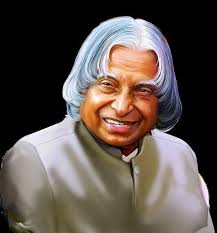
A. P. J. Abdul Kalam
11th President of India and Aerospace Scientist
🌍 Indian · Born October 15, 1931 · Died July 27, 2015
About
Avul Pakir Jainulabdeen Abdul Kalam, popularly known as Dr. A. P. J. Abdul Kalam, was an illustrious Indian aerospace scientist and statesman who served as the 11th President of India from 2002 to 2007. Born and raised in Rameswaram, Tamil Nadu, Kalam studied physics and aerospace engineering, embarking on a career that spanned over four decades as a scientist and science administrator, mainly at the Defence Research and Development Organisation and Indian Space Research Organisation. He was intimately involved in India's civilian space programme and military missile development efforts, earning him the title of the Missile Man of India for his work on the development of ballistic missile and launch vehicle technology. He also played a pivotal organizational, technical, and political role in India's Pokhran-II nuclear tests in 1998, the first since the original nuclear test by India in 1974. Widely referred to as the People's President, Kalam returned to his civilian life of education, writing, and public service after his single term. He was a recipient of several prestigious awards, including the Bharat Ratna, India's highest civilian honour. His inspiring books, such as Wings of Fire and Ignited Minds, continue to motivate millions of students and young professionals across the world. He collapsed and died of an apparent cardiac arrest on 27 July 2015 while delivering a lecture at the Indian Institute of Management Shillong, aged 83.
Intelligence Summary
Top Connections
Joined DRDO
Kalam joined the Defence Research and Development Organisation as a scientist after graduating from the Madras Institute of Technology.
Transferred to ISRO
He was transferred to the Indian Space Research Organisation where he served as the project director of India's first Satellite Launch Vehicle.
Successful SLV-III Launch
Led the scientific team that successfully deployed the Rohini satellite in near-Earth orbit using the SLV-III launch vehicle.
Awarded Bharat Ratna
Received India's highest civilian honor, the Bharat Ratna, for his scientific contributions and modernization of defense technology.
Elected 11th President of India
Succeeded K. R. Narayanan to become the 11th President of India, earning wide bipartisan political support.
Stepped Down as President
Completed his five-year presidential term and decided not to contest for a second term, returning to academia and public service.
Passed Away in Shillong
Suffered a sudden cardiac arrest and passed away while delivering a lecture to students at IIM Shillong.
All data sourced from verified public references.
A.P.J. Abdul Kalam, India's former president, dies
BBC News
https://www.bbc.com/news/world-asia-india-33678413 →