
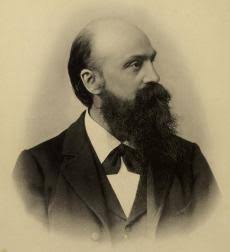
Wilhelm Killing
German mathematician who pioneered the study of Lie algebras
🌍 German · Born May 10, 1847 · Died February 11, 1923
About
Wilhelm Killing was a pioneering German mathematician who made highly significant contributions to the theories of Lie algebras, Lie groups, and non-Euclidean geometry. Born in Burbach, Germany, he studied at the University of Münster and later at the University of Berlin under the guidance of Karl Weierstrass and Ernst Kummer. Killing is most famous for his independent discovery of Lie algebras, contemporaneous with Sophus Lie, and for inventing the Cartan matrix and root systems long before Élie Cartan and Eugene Dynkin popularized them. He introduced the concept of the Killing form, which is a symmetric bilinear form crucial to the classification of Lie algebras. Killing spent much of his academic career as a professor at the University of Münster, where he also served as rector. His work laid the foundations for modern mathematical physics, particularly in general relativity and quantum mechanics, where Killing vector fields play an essential role in describing spacetime symmetries. Despite his groundbreaking research, much of his work was only fully appreciated later through the expansions made by Élie Cartan, who systematized his algebraic classifications.
Intelligence Summary
Earned Doctoral Degree
Received his PhD from the University of Berlin under the supervision of Karl Weierstrass and Ernst Kummer.
Joined Collegium Hosianum
Appointed as a professor at the Collegium Hosianum in Braunsberg, where he conducted much of his early research on Lie algebras.
Published Lie Algebra Classification
Published the first of his landmark papers classifying semi-simple Lie algebras, introducing root systems and the Killing form.
Appointed Professor at University of Münster
Returned to Münster as a professor of mathematics, where he would teach and eventually serve as rector.
No organizations found.
No connections found.
All data sourced from verified public references.