
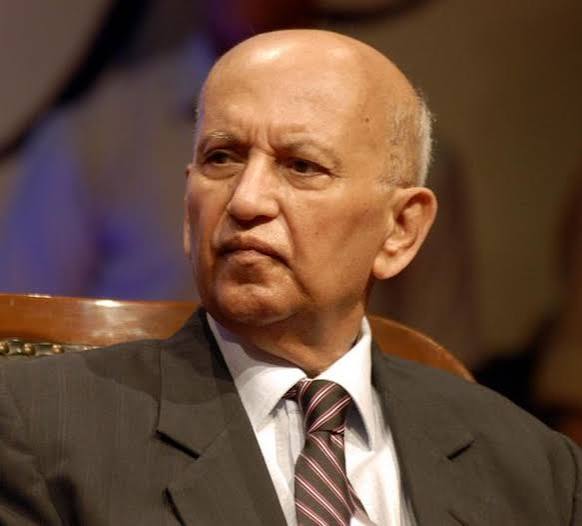
U. R. Rao
Former Chairman of ISRO and Space Scientist
🌍 Indian · Born March 10, 1932 · Died July 24, 2017
About
Udupi Ramachandra Rao, widely known as U. R. Rao, was a pioneering space scientist and former Chairman of the Indian Space Research Organisation (ISRO). Often referred to as the Satellite Man of India, Rao was the driving force behind the design and launch of India's first satellite, Aryabhata, in 1975. Born in Adamaru, Karnataka, he completed his doctorate at the Physical Research Laboratory in Ahmedabad under the mentorship of Vikram Sarabhai, the father of India's space program. Rao then moved to the United States, working as a post-doctoral fellow at MIT and an assistant professor at the University of Texas at Dallas, where he conducted research on cosmic rays and deep space probes.
Returning to India in 1966, Rao established the country's satellite technology program. As ISRO Chairman from 1984 to 1994, he accelerated the development of rocket technology, leading to the successful launches of the ASLV and PSLV rocket systems. He also initiated the development of the GSLV cryogenic rocket technology. In recognition of his vast contributions, Rao was awarded the Padma Vibhushan, India's second-highest civilian honor, in 2017. He was also the first Indian space scientist to be inducted into the prestigious Satellite Hall of Fame in Washington, D.C., in 2013.
Intelligence Summary
Top Connections
Earned Ph.D.
Completed his doctorate at Gujarat University under the guidance of Vikram Sarabhai.
Launch of Aryabhata
Led the team that designed and fabricated Aryabhata, India's first artificial satellite.
Appointed ISRO Chairman
Assumed leadership of the Indian Space Research Organisation, a position he held until 1994.
Satellite Hall of Fame Induction
Became the first Indian space scientist to be inducted into the Satellite Hall of Fame in Washington.
Padma Vibhushan Award
Posthumously honored with India's second-highest civilian award for his science and engineering contributions.
No organizations found.
All data sourced from verified public references.
U.R. Rao, pioneer of India’s satellite programme, passes away
The Hindu
https://www.thehindu.com/sci-tech/science/ur-rao-pioneer-of-indias-satellite-programme-passes-away/article19340639.ece →