
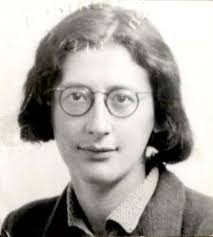
Simone Weil
French philosopher, mystic, and political activist
🌍 French · Born February 3, 1909 · Died August 24, 1943
About
Simone Weil was an influential French philosopher, mystic, and political activist whose writings explored social justice, labor rights, and Christian mysticism. Born in Paris to a secular Jewish family, Weil exhibited exceptional intellectual capability from an early age, attending the prestigious Ecole Normale Superieure, where she studied philosophy alongside contemporaries like Simone de Beauvoir. Driven by a deep commitment to the working class, Weil paused her teaching career in the mid-1930s to labor in industrial factories, including Renault and Alsthom, to experience firsthand the struggles of the proletariat. This experience deeply shaped her philosophical views on labor and human dignity. In 1936, she traveled to Spain to participate in the Spanish Civil War, joining an anarchist militia, but was forced to leave due to an accidental injury. During World War II, Weil fled occupied France with her family to New York but quickly traveled to London to join the Free French Forces under Charles de Gaulle. There, she worked tirelessly, writing reports and proposing reforms, while severely restricting her food intake in solidarity with those in occupied France. Already suffering from tuberculosis, her extreme self-deprivation led to her early death in 1943 at the age of 34. Though she published little during her lifetime, her posthumously published works established her as one of the most profound thinkers of the 20th century. Her ideas on attention, decreation, and the spiritual necessity of roots continue to influence philosophy, theology, and political theory.
Intelligence Summary
Graduated from Ecole Normale Superieure
Passed her philosophical aggregation, ranking among the top of her class, and began her teaching career.
Began industrial factory labor
Took a leave of absence from teaching to work in various manufacturing factories to experience the struggles of the working class firsthand.
Joined the Spanish Civil War
Enlisted in the Durruti Column to fight against Francisco Franco's nationalist forces, but was sent home after sustaining a severe burn injury.
Joined the Free French Forces
Arrived in London after fleeing Nazi-occupied France and began working as a writer and researcher for the French Resistance.
Passed away in Ashford
Died of tuberculosis and malnutrition at Grosvenor Sanatorium in Kent, United Kingdom, at the age of 34.
No organizations found.
No connections found.
All data sourced from verified public references.
The Need for Roots
Routledge